
Overview
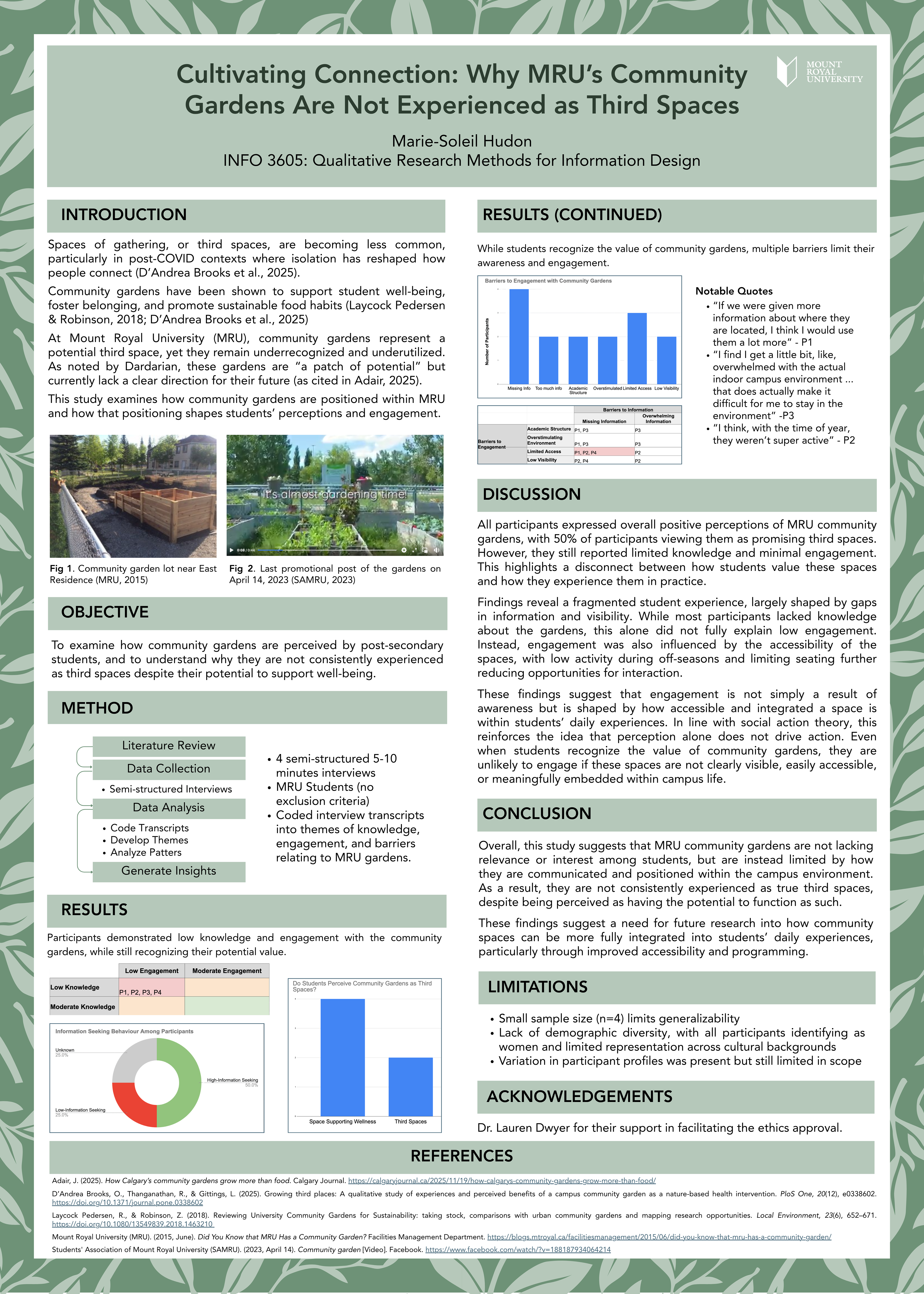
This qualitative research project explored how MRU students perceived and interacted with the community gardens on campus, particularly whether QQAqAZ well-being and belonging. Through four semi-structured interviews and thematic analysis, I investigated how the gardens' integration within campus life shaped students’ ability and willingness to engage with the gardens.
While all participants viewed the gardens positively, findings revealed that limited information, seasonal inactivity, and an overstimulating campus environment reduced opportunities for meaningful engagement. The research ultimately highlighted how spaces can hold strong potential for connection and well-being, yet still remain underutilized when they are not easily accessible or are disconnected from students' daily experiences and routines.
When: January-April 2026
Where: Qualitative Research Course
Skills Developed:
- Qualitative research
- Semi-structured interviewing
- Thematic coding and analysis
- Data interpretation and visualization
- Technical and report writing
Tools Used:
- Audio recorder (phone)
- Excel
- Canva
- Google Docs
The Context
Why does this research matter?
Mental health and isolation continue to be growing concerns among post-secondary students, especially following the COVID-19 pandemic. At the same time, spaces that encourage gathering, community, and belonging, often referred to as “third spaces,” are becoming less common.
Research has shown that community gardens can support student well-being, foster belonging, and encourage healthier and more sustainable lifestyles. Despite this potential, MRU’s community gardens remain underutilized by many students.
This research explored why MRU’s community gardens are not consistently experienced as meaningful third spaces and how their integration within everyday campus life influences student engagement.
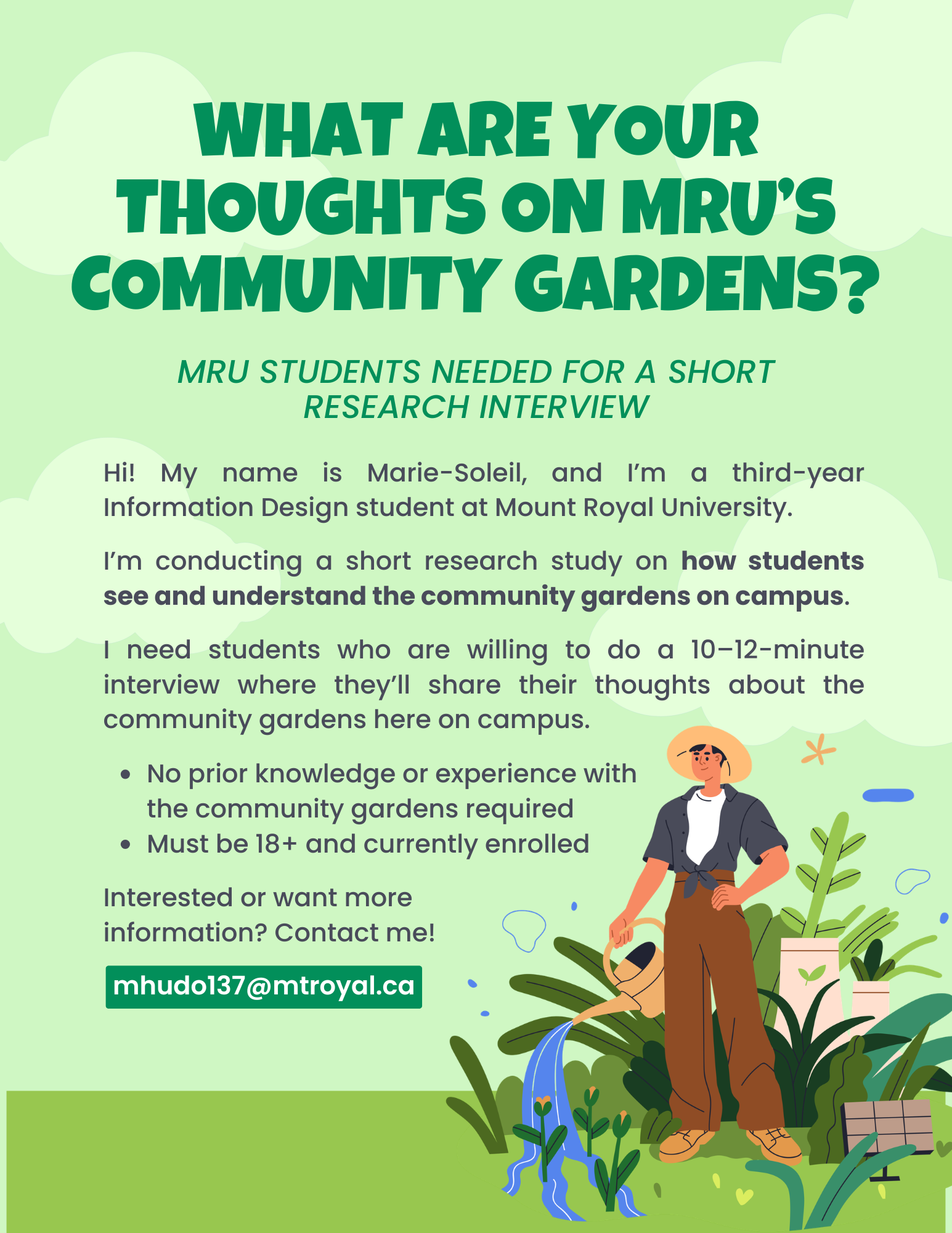
Recruiting poster
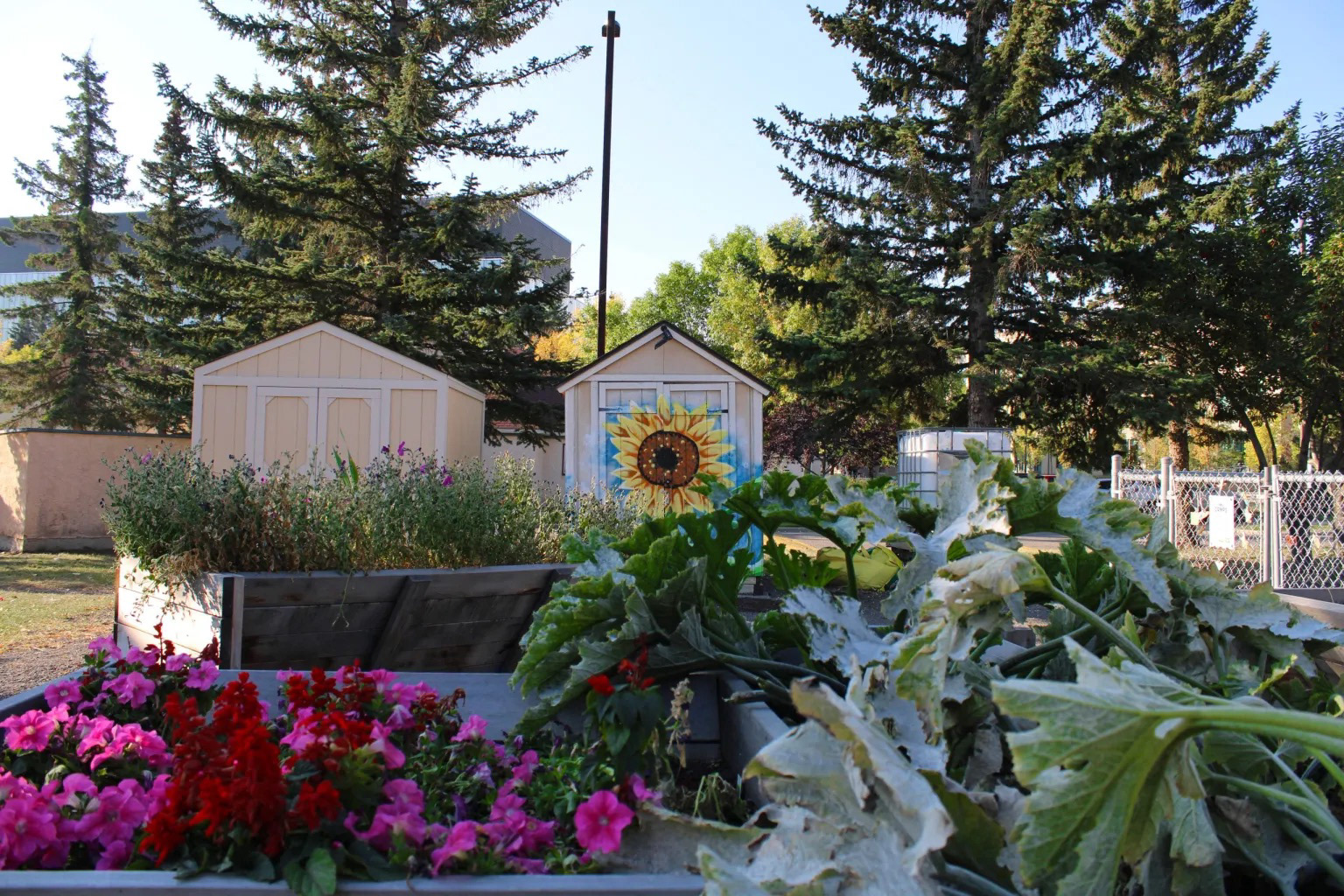
MRU community gardens in the springtime
The Research
Phase 1 - Interviewing
How Do Students View and Interact With MRU Community Gardens?
I wanted to better understand how MRU students perceived the university’s community gardens and whether they viewed them as meaningful spaces for connection, rest, and community engagement within campus life.
To explore this, I conducted four semi-structured interviews with MRU students, with questions focusing on awareness, accessibility, emotional experience, and engagement with the gardens.
Main Actions
1. Created and submitted a consent form and ethics proposal to the Human Research Ethics Board (HREB)
2. Developed semi-structured interview questions focused on awareness, engagement, and accessibility
3. Conducted four semi-structured interviews with MRU students
4. Explored how students perceived and interacted with the gardens
Key Findings
- Most participants viewed the gardens positively despite having limited interaction with them
- Limited information and visibility reduced opportunities for engagement
- Seasonal inactivity and limited seating made the spaces feel less socially inviting
- Participants described the indoor campus environment as overstimulating, yet still found quieter outdoor spaces difficult to access, often choosing to leave campus altogether instead
“If they were advertised a bit more or if we were given more information about where they are located, I think I would use them a lot more”- Participant 1
Initially, I assumed low engagement with the gardens was mostly connected to a lack of awareness. However, as interviews continued, it became clear that the issue was more complex. Even participants who appreciated the idea of the gardens still struggled to meaningfully engage with them in their daily lives.
Rather than focusing only on visibility, I became more interested in how the gardens fit (or failed to fit) into students’ everyday campus experiences and routines.
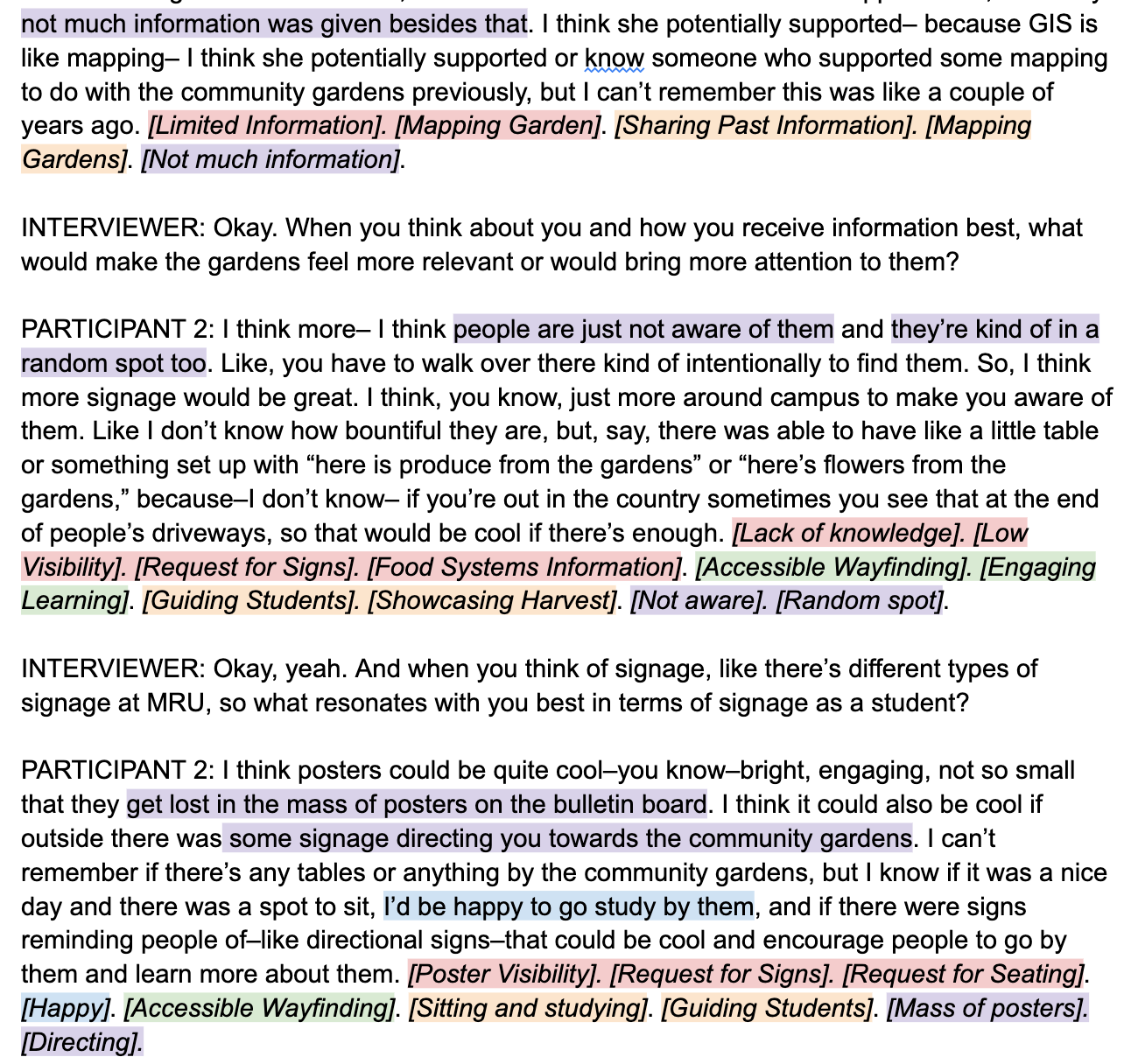
Initial coding in participant transcripts
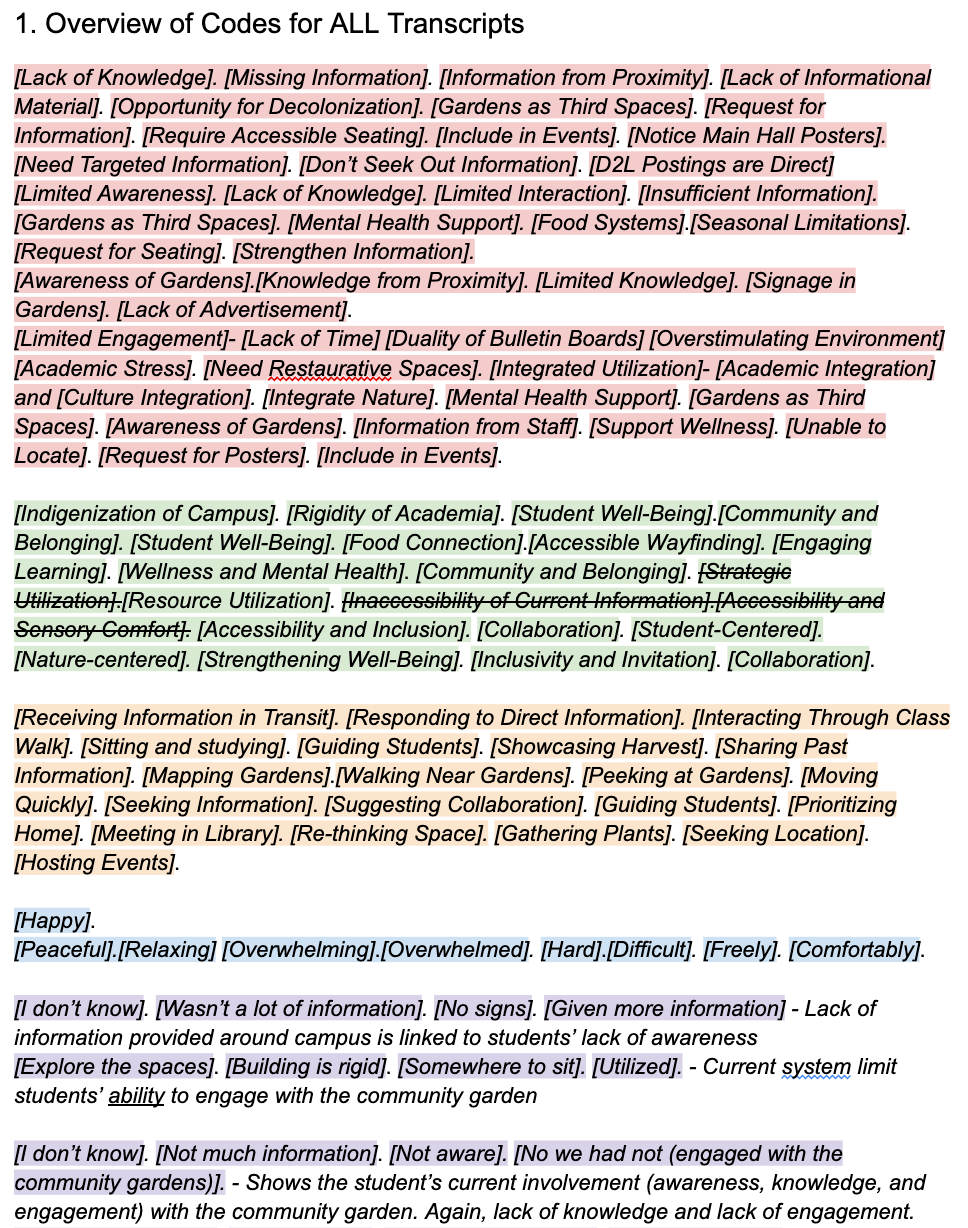
Overview of transcript codes
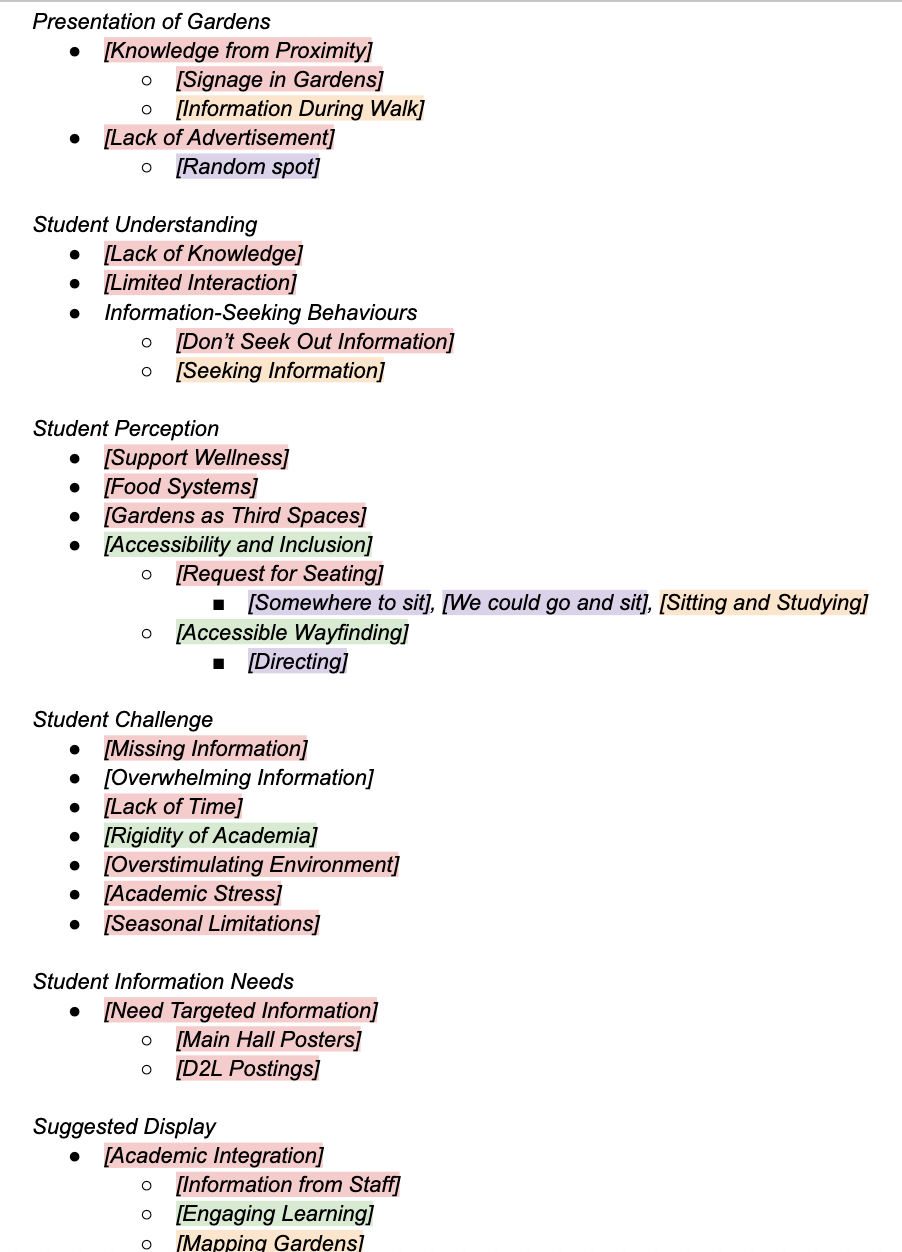
Axial coding from transcript codes
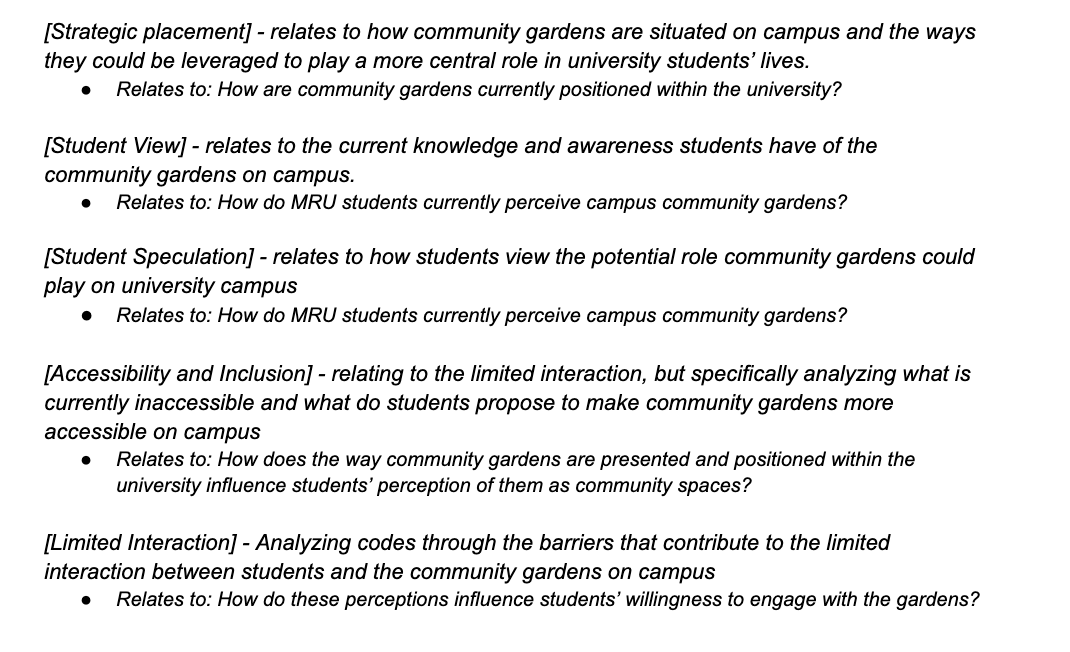
Focused coding from transcript codes
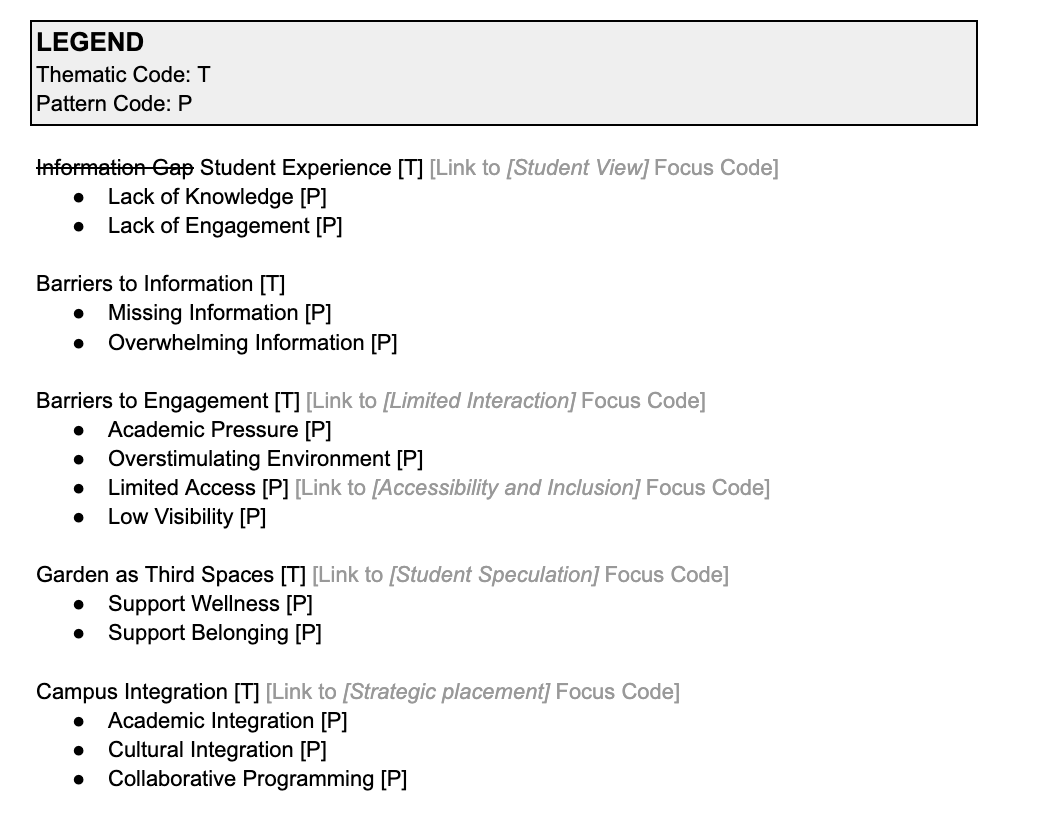
Pattern coding from transcript codes
Phase 2 - Analyzing
Why Are MRU’s Community Gardens Not Experienced as Third Spaces?
After completing the interviews, I analyzed participants’ responses to better understand the factors shaping students’ engagement with the gardens and how these spaces were experienced within everyday campus life.
This phase focused on identifying recurring themes related to accessibility, visibility, campus environment, and belonging.
Main Actions
1. Coded interview responses using thematic analysis, focusing on recurring themes and behaviours across participants
2. Identified relationships between accessibility, engagement, and campus environment
3. Visualized complex data through simple graphs, quotes, and charts to make information accessible to a wider audience
4. Synthesized findings into broader insights surrounding third spaces and student well-being
Key Findings
- All participants demonstrated low engagement with the gardens despite generally viewing them positively
- Missing information and limited accessibility emerged as the most common barriers to engagement
- Students were more likely to perceive the gardens as spaces that support well-being than as active third spaces integrated into campus life
"These are spaces on campus that I think do really have a big potential to actually really play into student mental health and wellness"- Participant 3
As themes emerged across interviews and coding, a disconnect became apparent between how students perceived the gardens and how they experienced them in practice. While participants consistently described the gardens as spaces with positive social and emotional potential, all participants still reported low engagement and limited interaction with them.
The findings suggested that low engagement was not simply caused by a lack of student interest. Instead, barriers such as limited visibility, inaccessible placement, low seasonal activity, and an overstimulating campus environment reduced opportunities for meaningful interaction and ongoing use.
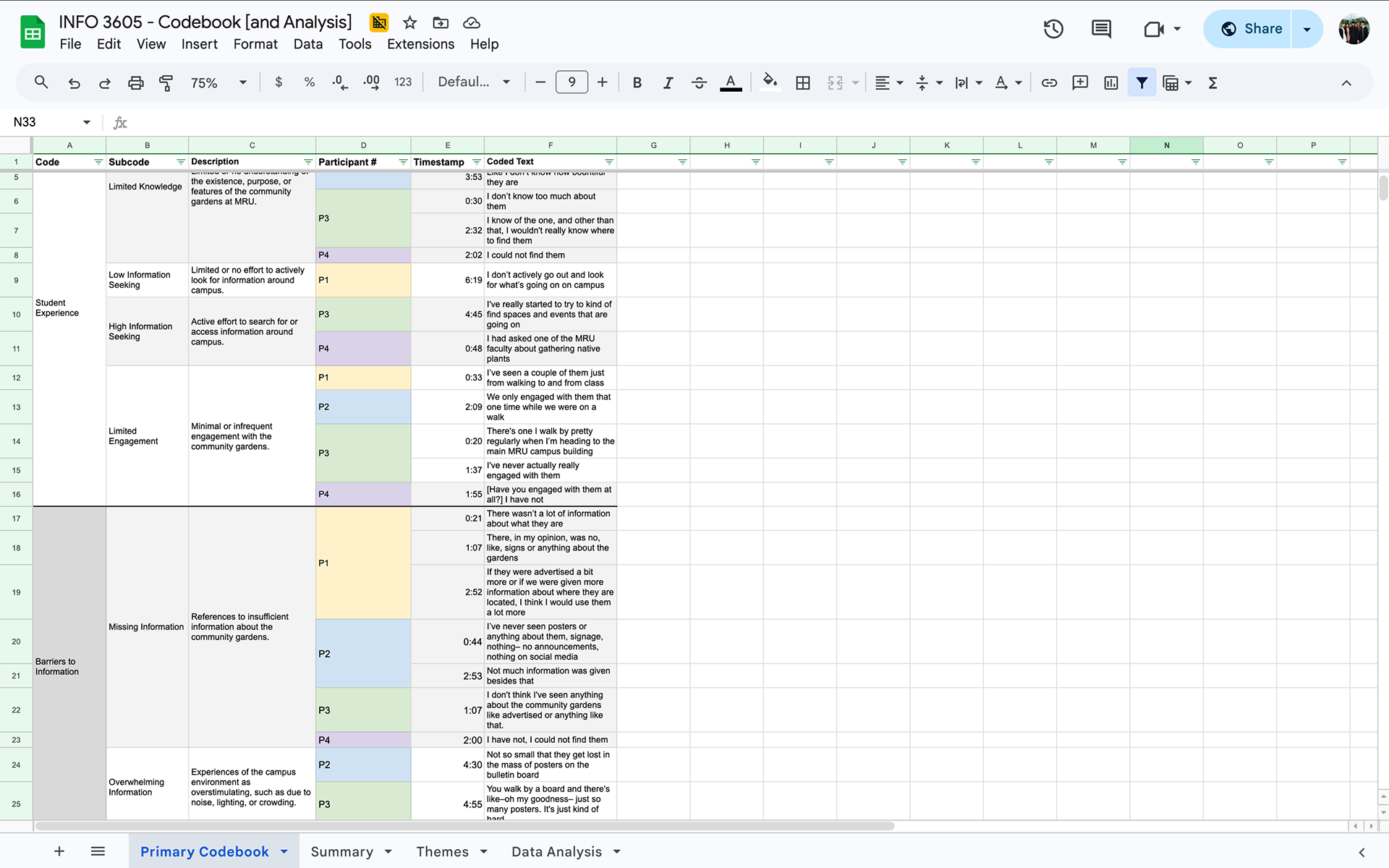
Codebook used for analysis
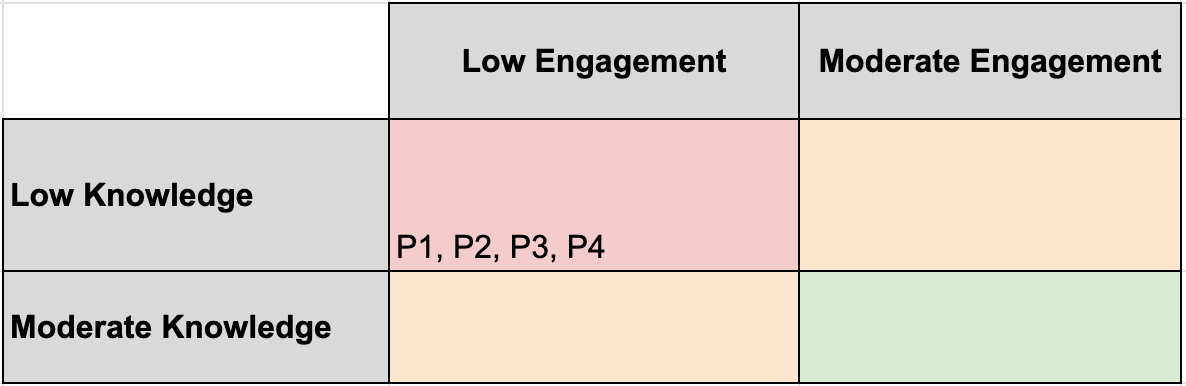
Participants' level of knowledge vs engagement
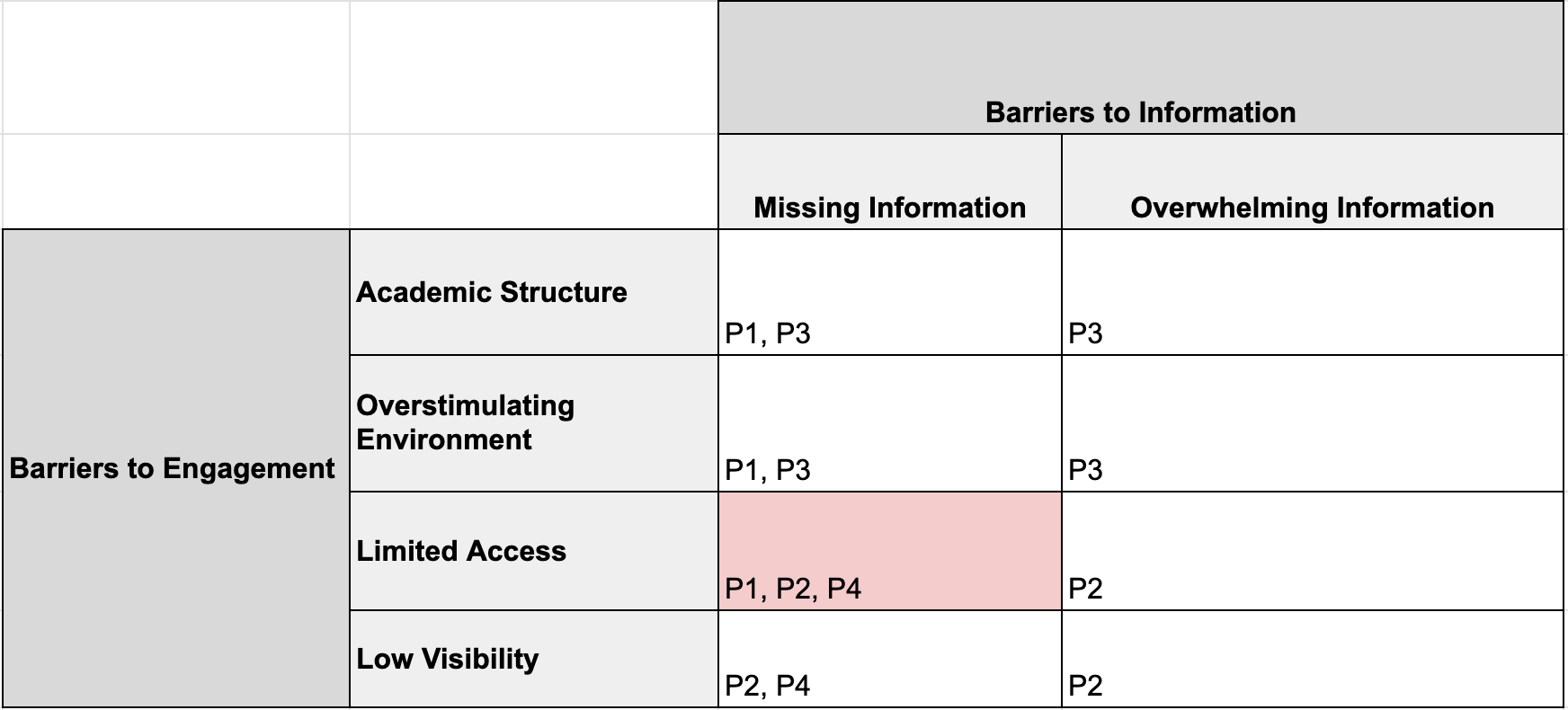
Barriers to knowing about vs interacting with the community gardens
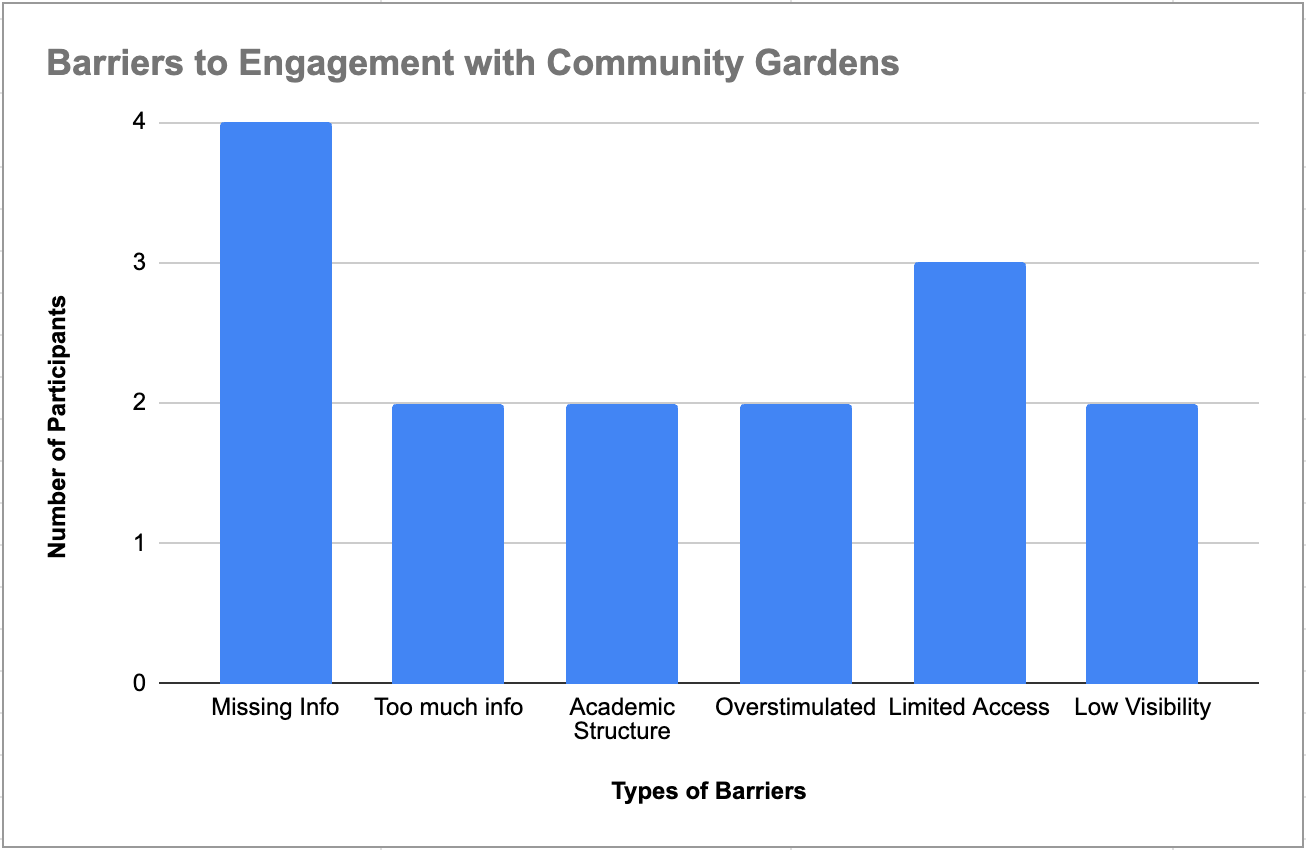
Main identified barriers to engagement
Proposed Next Steps
This research suggests a need for further exploration into how MRU community gardens could become more integrated into students’ everyday campus routines rather than existing as isolated campus spaces. Future research at MRU could explore:
- Whether integrating the gardens into existing wellness initiatives, campus events, or academic courses increases interaction and visibility
- How overstimulating indoor campus environments influence students’ ability to engage with community-oriented (third) spaces after classes
- How signage, communication, and physical placement shape students’ awareness of and access to the gardens
Future studies with a larger participant sample could also help identify whether these experiences differ across commuter students, international students, mature students, and students involved in campus communities or organizations.