
Overview
This project explored how Rich Prospect Browsing could be used to examine endangered species affected by the illegal wildlife trade through a digital cabinet-of-curiosities interface. Inspired by historical systems of collection and display, the project investigated how taxonomy, interaction, and visual organization could encourage users to explore relationships between species rather than view them as isolated objects.
Using a dataset of over 400 species sourced from the IUCN Red List, I developed an exploratory interface prototype that allowed users to filter, regroup, and compare species while maintaining visibility of the broader collection. Throughout the design process, I explored how interaction design could support environmental awareness and critical reflection surrounding systems of commodification and ownership.
When: March-April 2026
Where: Content Development Course
Skills Developed:
- Rich Prospect Browsing
- UX/UI
- Taxonomy Development
- Iterative Design
- Content Modelling
Tools Used:
- Freeform (brainstorming)
- IUCN Red List Database
- Figma
- Canva
- Excel
The Context
Why does this project matter?
Endangered species affected by the illegal wildlife trade are often encountered through fragmented facts, statistics, or isolated media coverage, making it difficult to understand the larger environmental systems and relationships shaping their exploitation. At the same time, large datasets surrounding conservation and biodiversity can quickly become overwhelming and difficult to meaningfully explore.
This project explored how Rich Prospect Browsing could encourage deeper engagement with endangered species by helping users identify patterns, relationships, and broader systems across an entire collection rather than focusing on individual species alone.
Through a cabinet-of-curiosities-inspired interface, the project also examined how historical systems of collection, categorization, and display continue to shape contemporary relationships between humans, animals, ownership, and environmental exploitation.
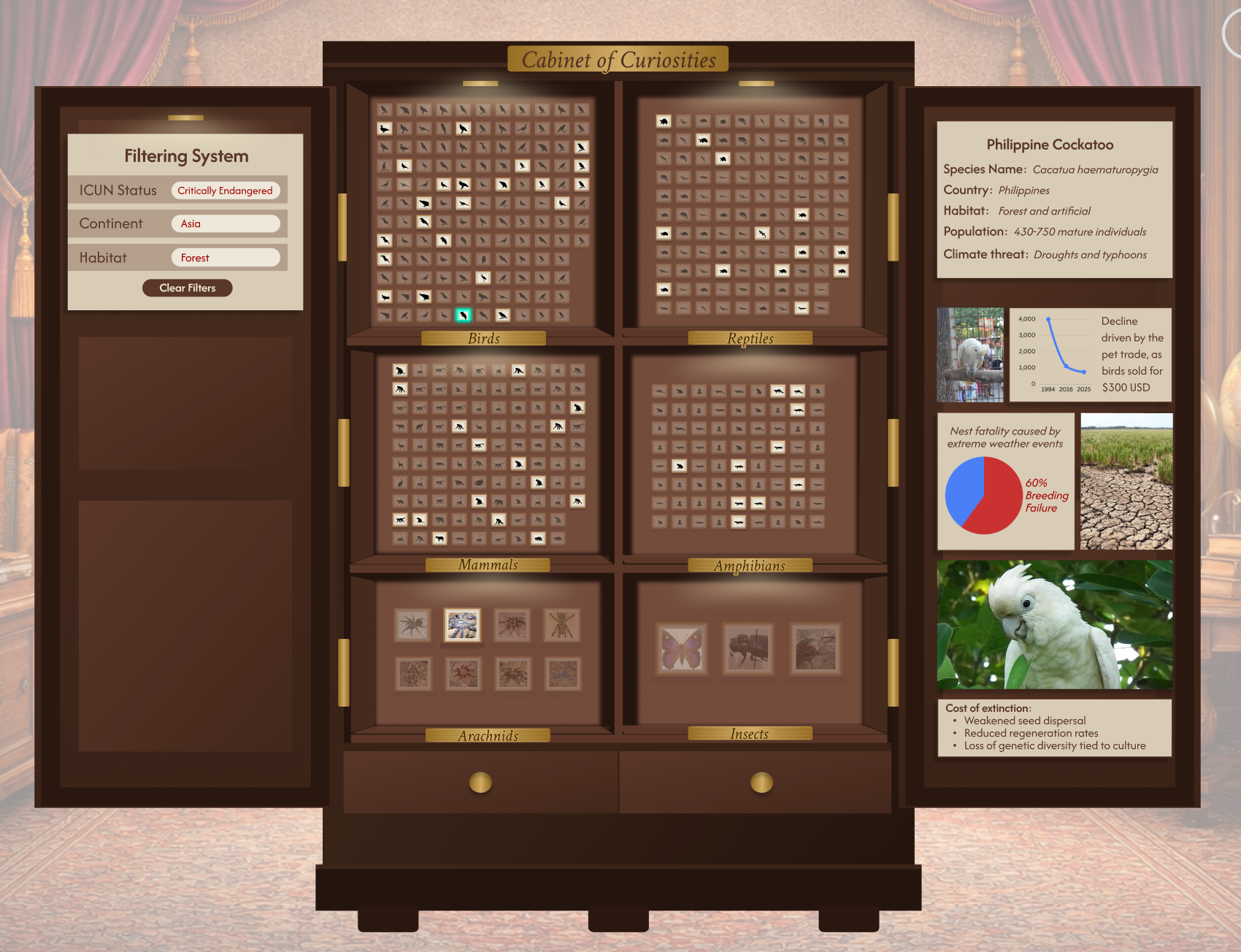
Rich prospect browsing interface with information about species displayed
The Process
How Do Users Expect Information to Be Organized?
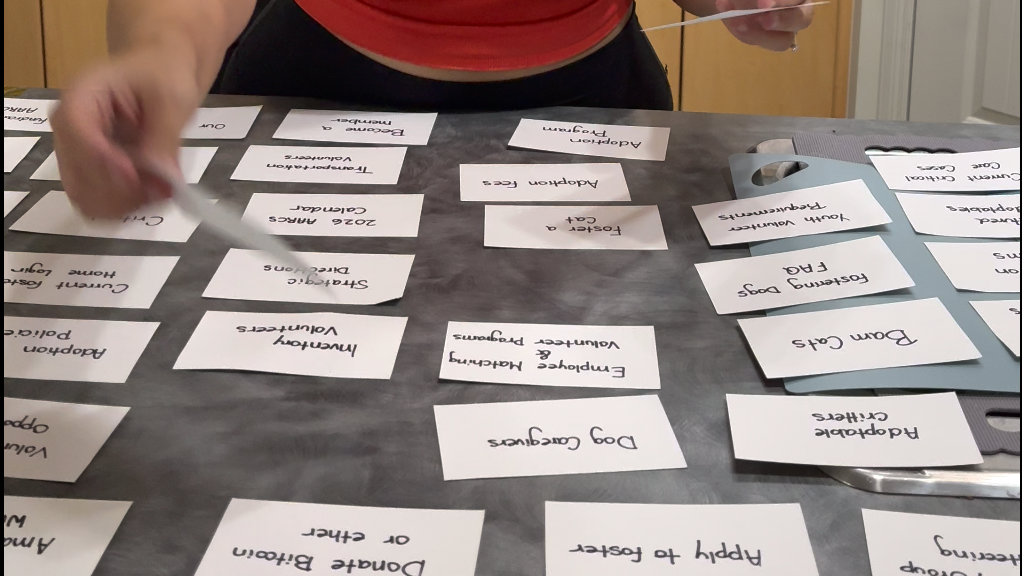
I first wanted to understand how users naturally grouped and interpreted information about volunteering, donations, fostering, and other support across the AARCS website.
To do so, I conducted seven moderated, in-person card-sorting sessions in which participants organized website terms pulled directly from the AARCS website.
Initial Idea
I planned to include 50 animals arranged in a spiderweb-style layout. The idea was to represent the items as coloured dots that would reorganize themselves on the web based on selected filters (animal type, country of residence, and IUCN Red List status), while species that did not fit the criteria would disappear from the display.
When a user clicked on a dot, the interface would zoom in to reveal a large information panel containing details such as habitat, ecological role, primary climate threat, the environmental consequences of extinction, and one feasible conservation action.
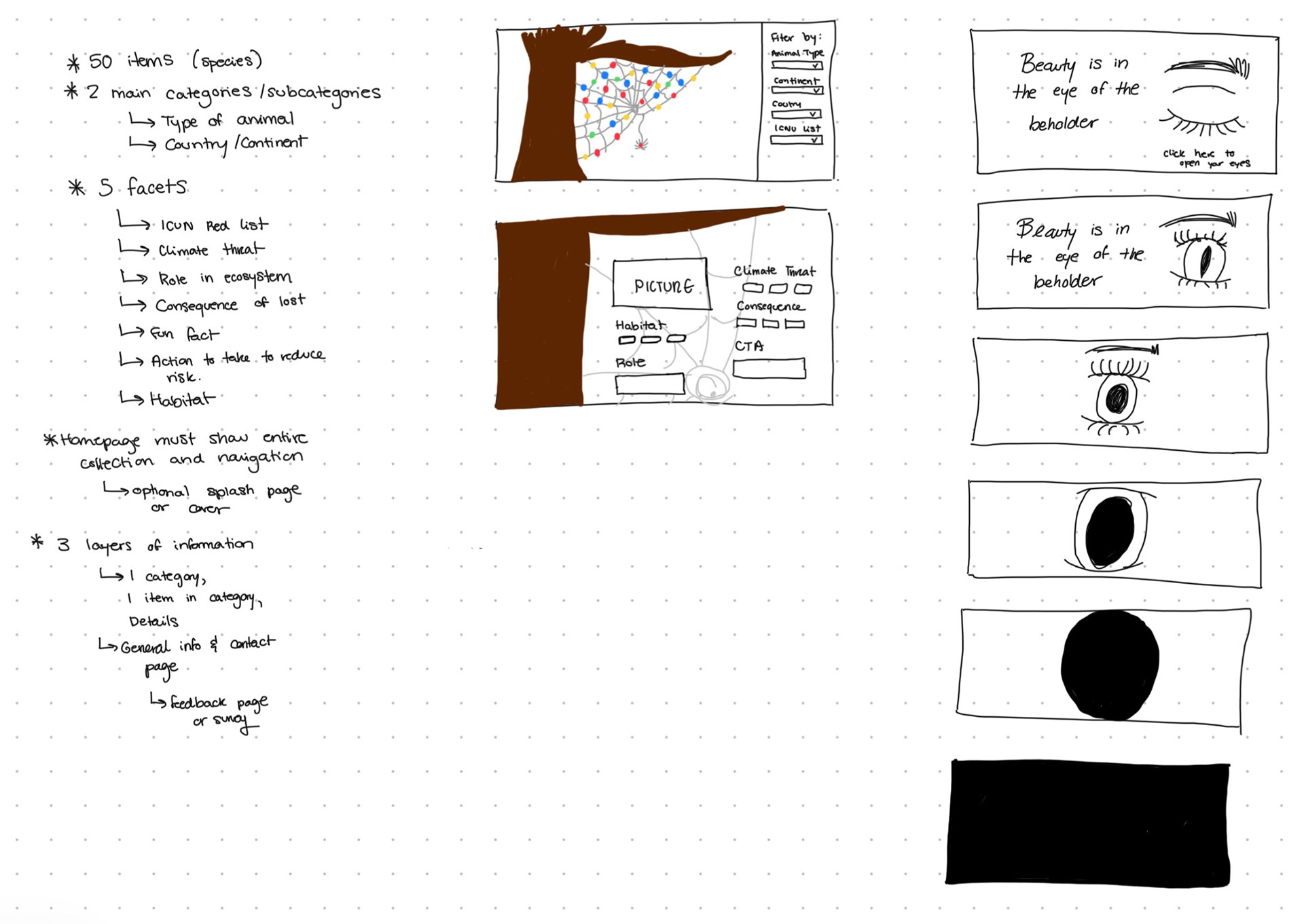
Early concept using Freeform
First Feedback & Realization
After receiving feedback, I fully understood that for an interface to be considered Rich Prospect Browsing, the entire collection must remain visible at all times. This meant that my idea of zooming in and isolating information away from the collection would not work. This was a turning point where I had to move away from an idea I initially liked and begin thinking more critically about how to design for both structure and interaction.
New Direction
My final concept was inspired by cabinets of curiosities. This direction allowed me to maintain an unsettling aesthetic while also reinforcing themes of collection, ownership, and environmental impact.
Choosing the Proper Tool
For this idea, I initially started working in Canva, as I thought it would be easier to design the cabinet structure and then import it into Figma to simulate interactivity. Looking back, the result was fairly limited, and I’m glad I didn’t continue designing in Canva.
Once I switched to Figma, I was able to develop my concept further. I created a cabinet structure that displays the entire collection at once, while organizing species into compartments based on their classification (birds, reptiles, mammals, etc.).
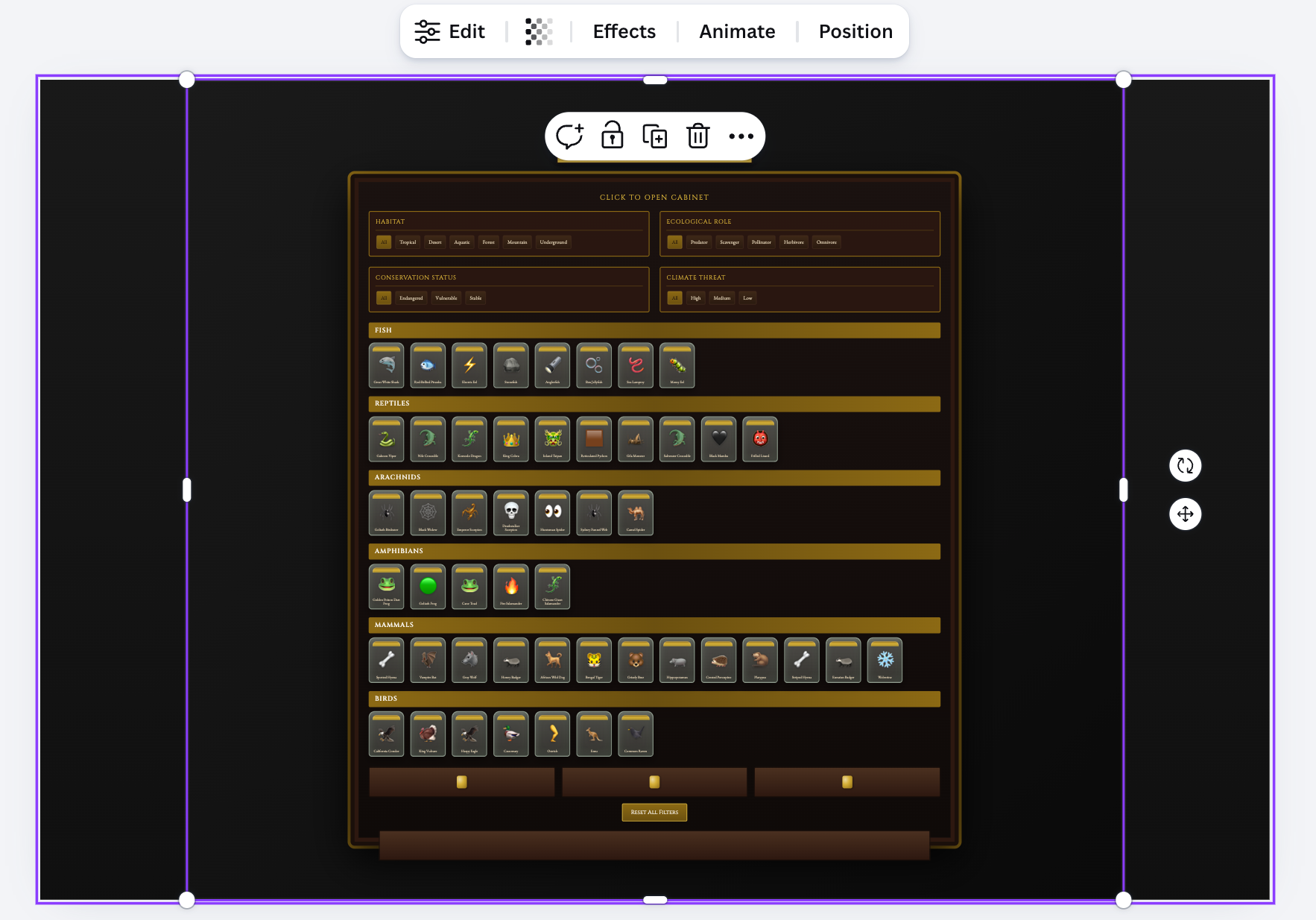
Early visualization of cabinet interface with the help of Canva AI
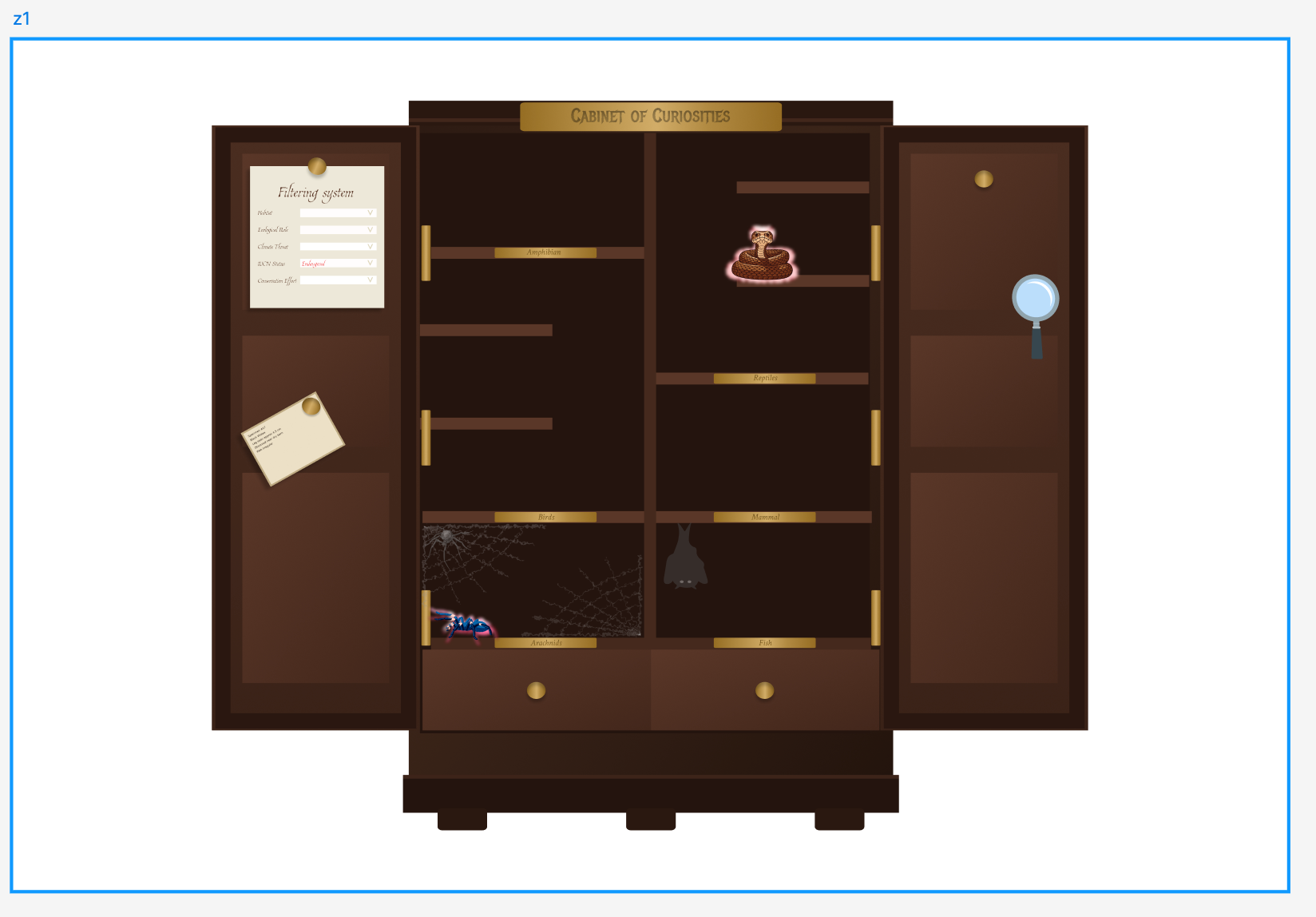
Early visualization of Cabinet interface created on Figma.
Refining Taxonomy
Another major shift in my process came when I reconsidered the number of items in my collection. Initially, I had selected 50 species simply because it met the assignment requirement. However, I realized that the number of items should be intentional and meaningful.
This led me to refine my focus. Instead of only looking at “scary animals,” I shifted toward endangered species affected by the illegal wildlife trade. This allowed me to connect the concept of collecting within cabinets of curiosities to the real-world issue of animals being collected and commodified.
Through refining my dataset using the IUCN Red List, I expanded my taxonomy from 150 to 417 species by applying more specific criteria related to trade, population trends, and threats.
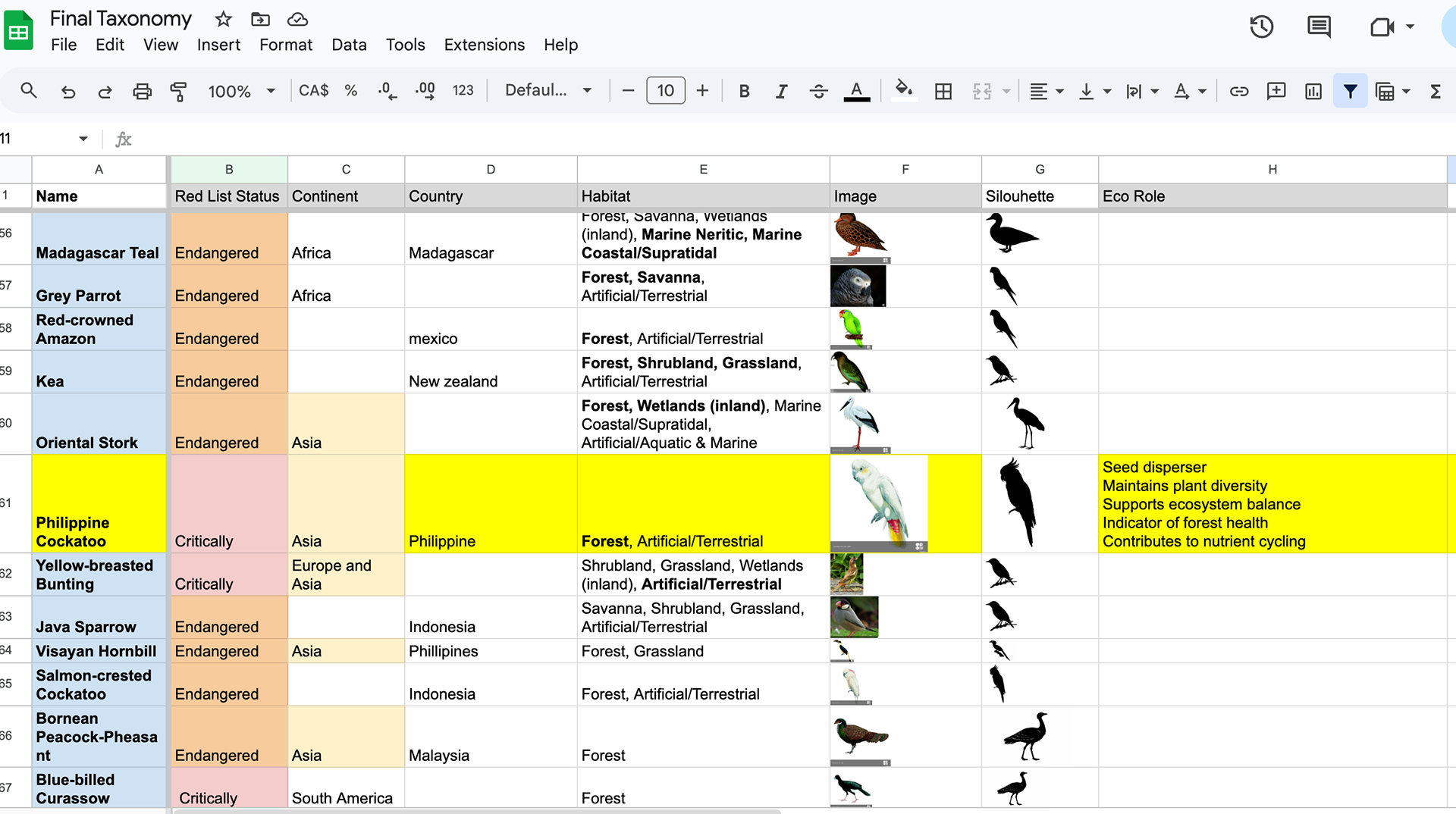
Final taxonomy with featured species highlighted in yellow
Final Concept
With this larger dataset, I had to rethink my visual approach. Earlier ideas such as jars became impractical and visually overwhelming.
Instead, I drew from the idea of cabinets as early forms of museums and decided to present each species as a framed specimen. This created a more cohesive and scalable system.
Through critique and iteration, I strengthened the project’s environmental messaging by more clearly integrating climate change, species decline, and the ecological consequences of extinction into the information panels.
I also refined the visual system to improve readability, hierarchy, and clarity across the interface. Typography, colour contrast, spacing, and alignment were adjusted to make the collection easier to navigate without overwhelming users.
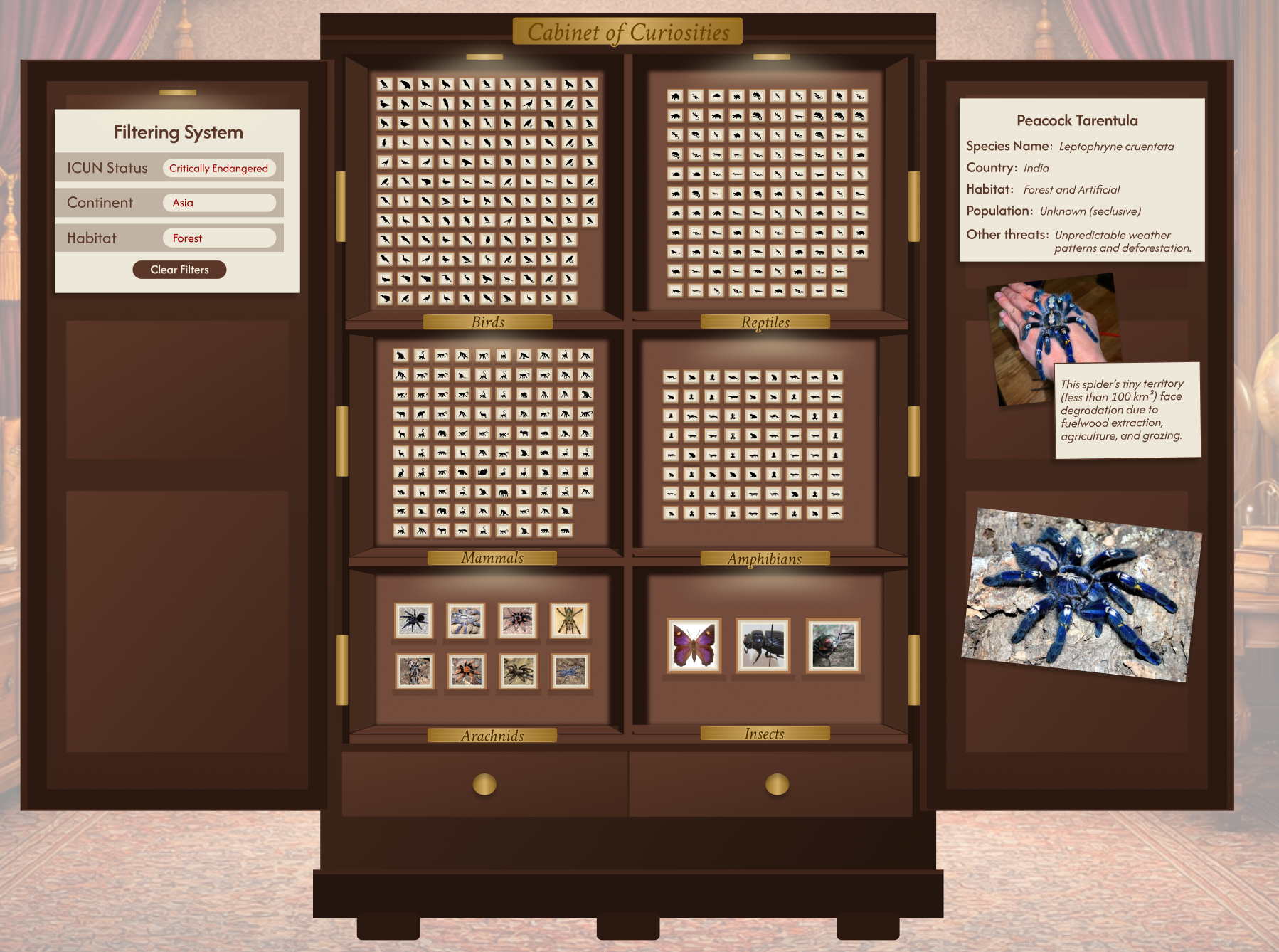
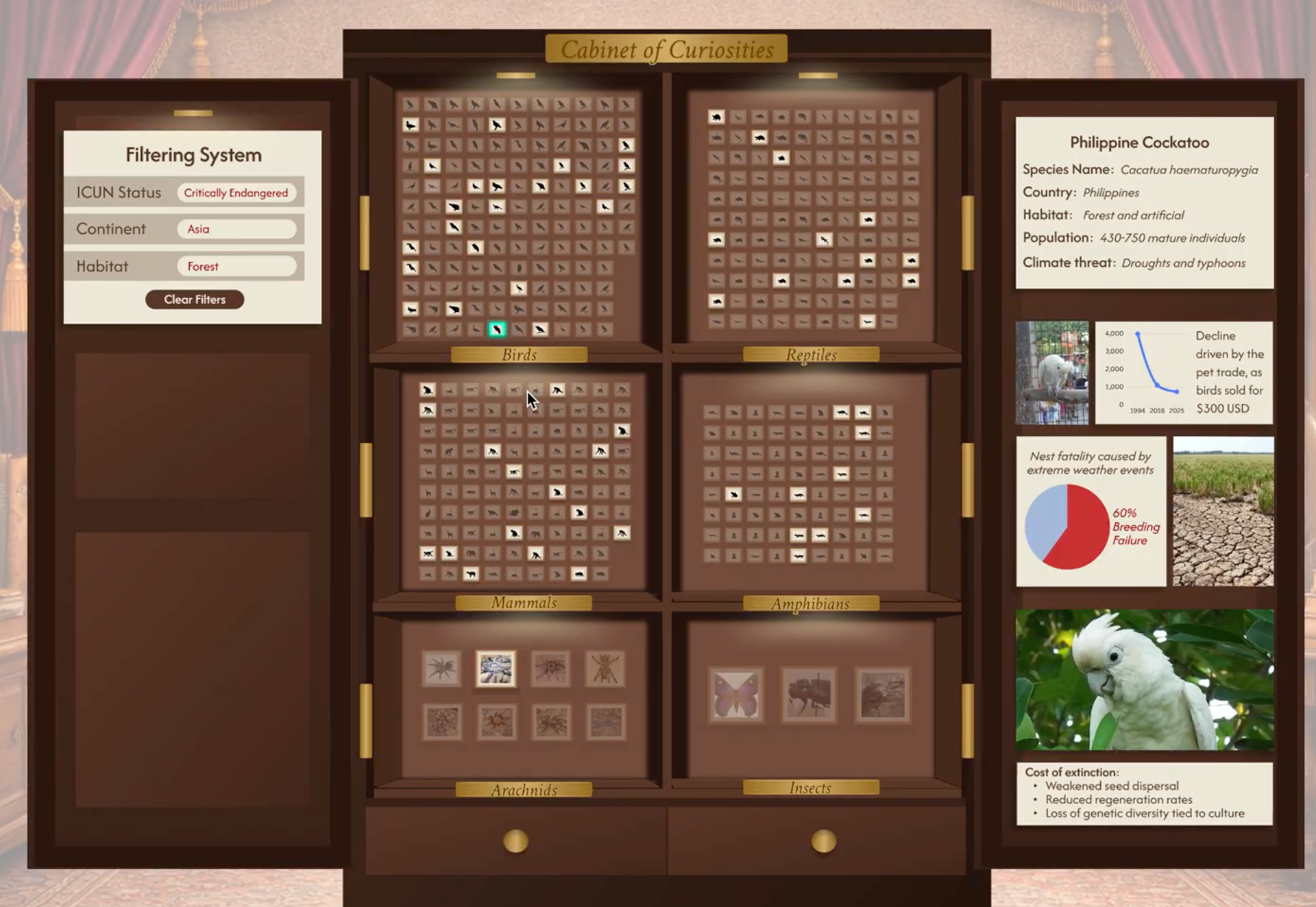
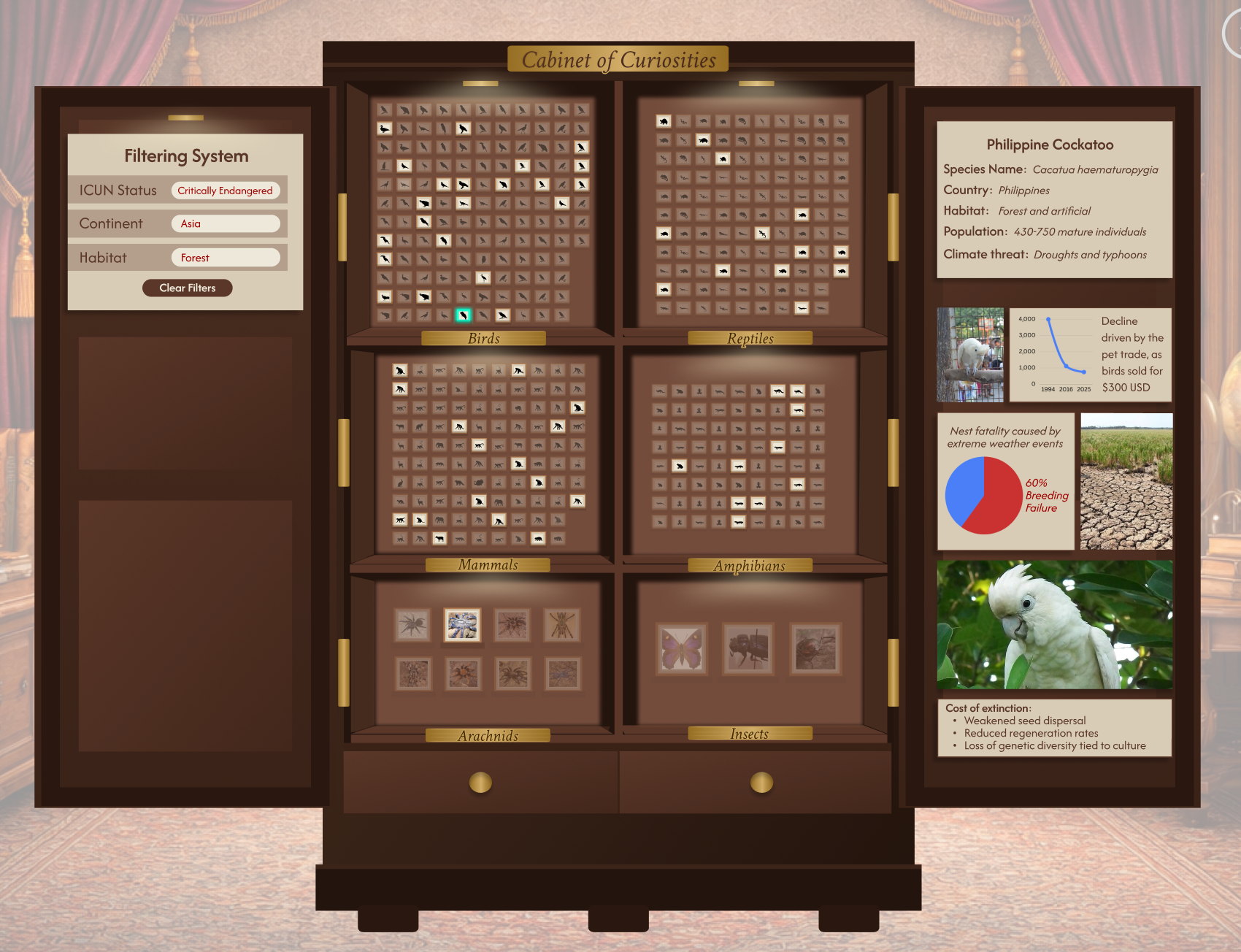
These refinements ultimately shifted the project away from purely aesthetic experimentation and toward a more thoughtful interaction system that prioritized exploration, accessibility, and environmental storytelling.
Proposed Next Steps
Based on feedback and critique throughout the design process, future iterations of the project would focus on:
- Expanding the collection to include more actionable conservation information
- Developing more interactive comparison and filtering systems
- Exploring participatory features that allow users to contribute to the archive
The goal of these revisions would be to strengthen the project’s ability to further support users' exploration, environmental awareness, and critical reflection on anthropocentrism.